Global economic growth is projected to slow to 3.0% in 2026 from 3.5% in 2025, according to a new forecast from the International Monetary Fund.
Growth is expected to recover to 3.4% in 2027 as an AI-led technology upswing partly offsets the energy and supply shock from the war in the Middle East.
The relatively steady global totals conceal sharp differences between countries. Economies tied to AI hardware and technology value chains are outperforming, while many energy importers with limited technology exposure face weaker activity and higher prices.
Global headline inflation is projected to rise from 4.1% in 2025 to 4.7% in 2026, interrupting the disinflation trend that had been in place since early 2024. Inflation is expected to ease to 3.9% in 2027.
AI exporters pull ahead
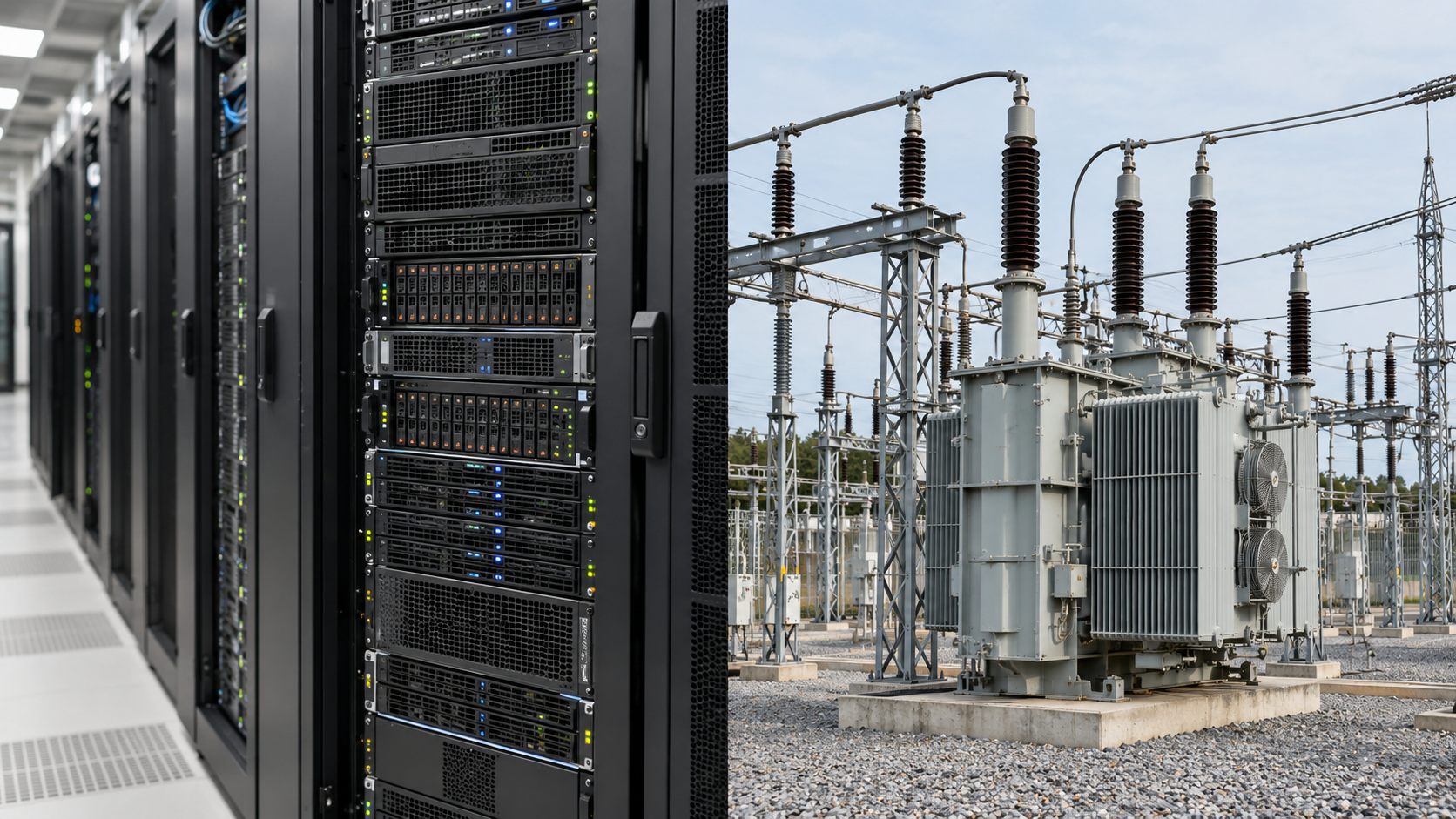
Much of the stronger-than-expected growth recorded in early 2026 was concentrated among four leading net exporters of AI-related hardware: Korea, Malaysia, Taiwan and Thailand.
Their first-quarter growth exceeded the IMF’s April projections by an average of 4.4 percentage points. The average surprise for the rest of the world was a negative 0.3 percentage point.
Korea’s economy grew at a seasonally adjusted annualized rate of 7.5% in the first quarter, more than four times the IMF’s previous projection of 1.8%. Semiconductor and AI-hardware exports were the main drivers.
The IMF now expects Korea to grow by 2.6% in 2026, an upgrade of 0.7 percentage point from April. Malaysia is forecast to grow by 4.7%, supported by data-center activity and the wider technology cycle.
China also expanded faster than expected during the first quarter, although the IMF projects full-year growth of 4.6% in 2026 and 4.1% in 2027. Higher oil prices, weak domestic consumption and longer-term structural pressures are expected to weigh on activity.
Higher energy costs push inflation upward
Energy prices remained roughly 25% above prewar levels when the update was prepared, despite falling from their April peaks.
The IMF projects crude-oil prices to rise by about 32% in 2026 from the previous year. Natural-gas prices are projected to increase by 22%, while fertilizer prices rise by 26% and food prices by 8%.
Those increases are not being felt equally. Since the conflict began, liquefied-natural-gas prices have climbed by about 50% in Asia and 25% in Europe, compared with roughly 10% for the main United States benchmark.
The IMF says a growing renewable-energy share and lower energy use per unit of economic output helped many economies absorb the shock better than expected. That assessment adds context to recent StatsJournalist coverage showing that renewables led growth in global energy supply in 2025.
Growth forecasts vary widely
The United States is forecast to grow by 2.3% in 2026, supported by technology investment, relatively favorable financial conditions and its position as a net energy exporter.
Growth in the euro area is projected at only 0.9%, reflecting higher energy prices, weak consumer confidence and softer momentum in several economies.
| Economy or region | 2026 growth | 2027 growth |
|---|---|---|
| World | 3.0% | 3.4% |
| United States | 2.3% | 2.2% |
| Euro area | 0.9% | 1.2% |
| China | 4.6% | 4.1% |
| Korea | 2.6% | 2.5% |
| Middle East and Central Asia | 0.7% | 6.5% |
| Sub-Saharan Africa | 4.3% | 4.5% |
The largest regional swing is expected in the Middle East and Central Asia. Growth is projected to drop to 0.7% in 2026 before rebounding to 6.5% in 2027, reflecting assumed disruptions to energy production and transport followed by reopening and reconstruction of trade flows.
World trade growth is also expected to weaken sharply, from 5.0% in 2025 to 3.5% in 2026. The IMF expects a partial recovery to 4.3% in 2027.
Why it matters
The forecast suggests that AI investment is becoming large enough to influence national and global growth rates, but the benefits remain concentrated in countries that manufacture hardware, host data centers or participate in technology supply chains.
Many low-income countries face the opposite combination: higher fuel, fertilizer and food costs without a substantial boost from technology exports. That raises pressure on household budgets, agricultural production, government finances and food security.
The divergence also means the headline global growth rate may reveal little about conditions in individual economies. Countries can experience strong technology-led expansion, stagnation or contraction while the worldwide average moves only slightly.
The forecast depends on uncertain assumptions
The IMF’s baseline assumes that the Strait of Hormuz begins reopening in mid-July and that conditions broadly return to their prewar state by March 2027. Its commodity-price assumptions are based on market pricing available on June 10.
Updated forecasts cover economies representing about 90% of world output when measured using purchasing-power-parity weights.
The main downside risks include renewed conflict, additional trade restrictions, depleted energy inventories and a correction in expectations about AI profitability. Faster energy-market normalization or stronger technology investment could produce better outcomes.
The baseline assumes that the current AI investment cycle eventually moderates and does not include an additional, economy-wide productivity boost from AI. The projections therefore measure one possible path rather than a certain outcome.