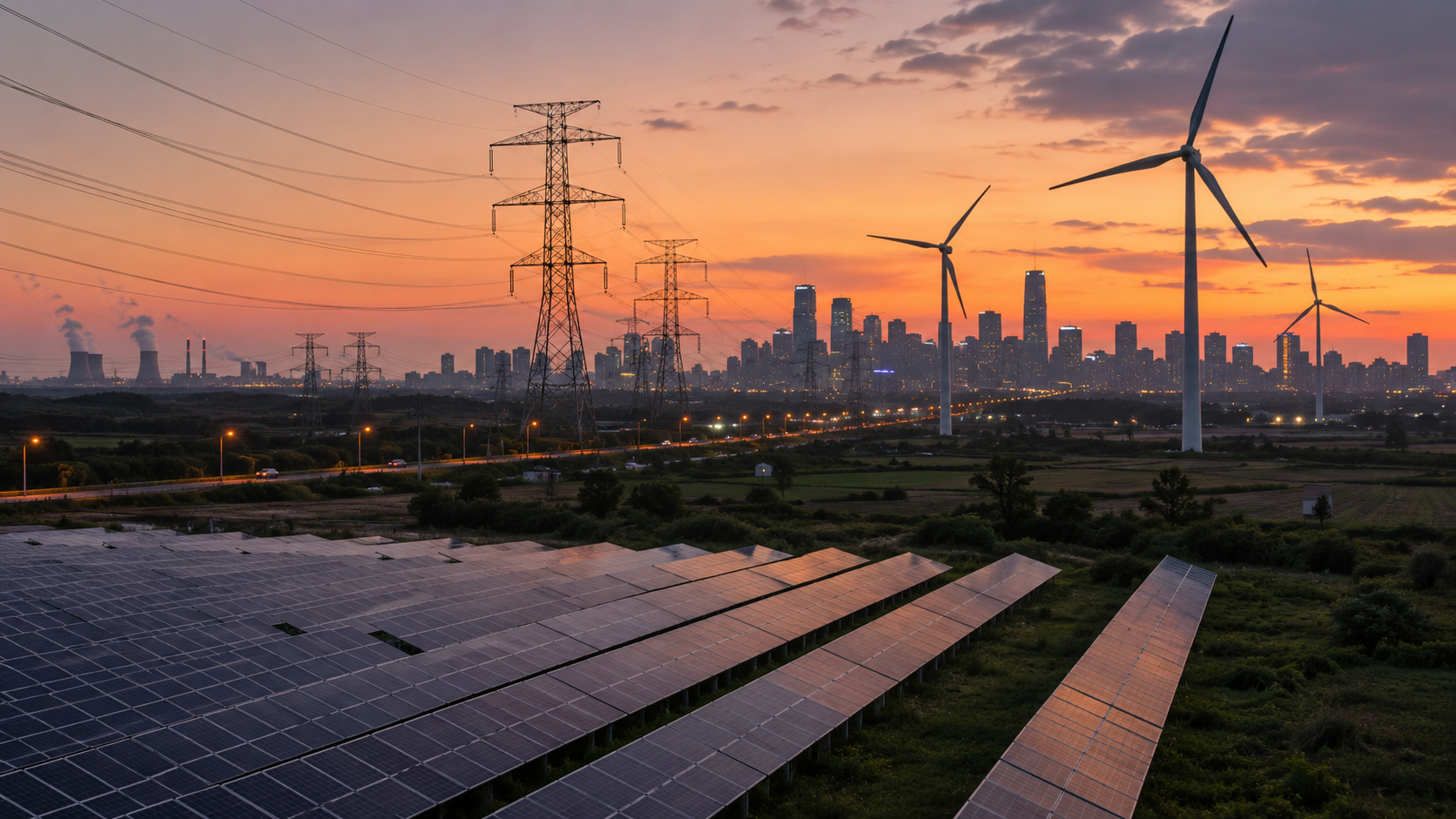
Global energy supply exceeded 600 exajoules in 2025, rising 1.7% from the previous year as demand continued its long-term climb, according to the Energy Institute’s latest Statistical Review of World Energy.
Renewables were the largest source of growth in total energy supply for the first time outside a recession, with solar accounting for 71% of that increase.
The milestone did not displace fossil fuels from the center of the global energy system. Coal, oil and gas still accounted for 86% of total energy supply in 2025, and every major source of energy increased in absolute terms.
Global energy-related carbon dioxide emissions rose 1.1% to 35.8 billion tonnes of CO2. Total emissions, including energy and other sources, also rose 1.1%, reaching 41 billion tonnes of CO2.
The United States accounted for more than a third of the annual increase in global energy-sector CO2 emissions. In absolute terms, the report said the increase in U.S. emissions was four times greater than China’s.
Electricity demand grew faster than total energy supply, rising 3% year over year. The report points to electric vehicles, data centers and artificial intelligence as expanding sources of electricity demand.
Solar power was the standout performer, growing 30% in 2025. Solar reached 8.7% of global power generation, surpassing wind at 8.4% for the first time and nearly matching nuclear power’s 8.8% share.
Wind power remained the second-largest source of renewable growth, increasing 8.2% from 2024. Global battery storage capacity also expanded sharply, rising 66% to 302 gigawatts.
Oil consumption increased 1.3% to 103 million barrels per day, accelerating from 1.1% growth in 2024. Non-OECD oil demand rose 2%, while OECD oil demand grew 0.4%.
Natural gas demand rose 1.6%, below its 10-year average growth rate of 1.9%. Growth was concentrated in Europe, the Middle East and North America, while Asia-Pacific gas consumption was flat.
Coal consumption increased 0.7% worldwide. China’s coal consumption was flat, India’s rose just 0.6%, and U.S. coal consumption jumped 10% after higher gas prices shifted power-generation economics.
The Asia-Pacific region remained the world’s dominant energy consumer, accounting for about 47% of total energy supply. It also consumed about 83% of global coal while contributing heavily to renewable growth.
China remained central to both trends. Its solar generation rose 40% in 2025, while wind generation increased 13%, helping hold coal consumption flat for the first time in a decade.
India’s fossil fuel consumption was broadly flat in 2025, with gas down 5.9%, coal up 0.6% and oil up 0.3%. Fossil fuels still made up 93% of India’s total energy supply, the lowest share in the report’s dataset.
Europe continued its shift toward cleaner electricity, with renewables reaching 35.6% of EU power generation. EU total energy supply rose 0.5%, while renewables grew 5% year over year.
The report’s broader finding is that the energy transition is accelerating, but not yet reducing global fossil fuel use in absolute terms. In 2025, renewables led growth, electricity gained share, and emissions still reached a new high.