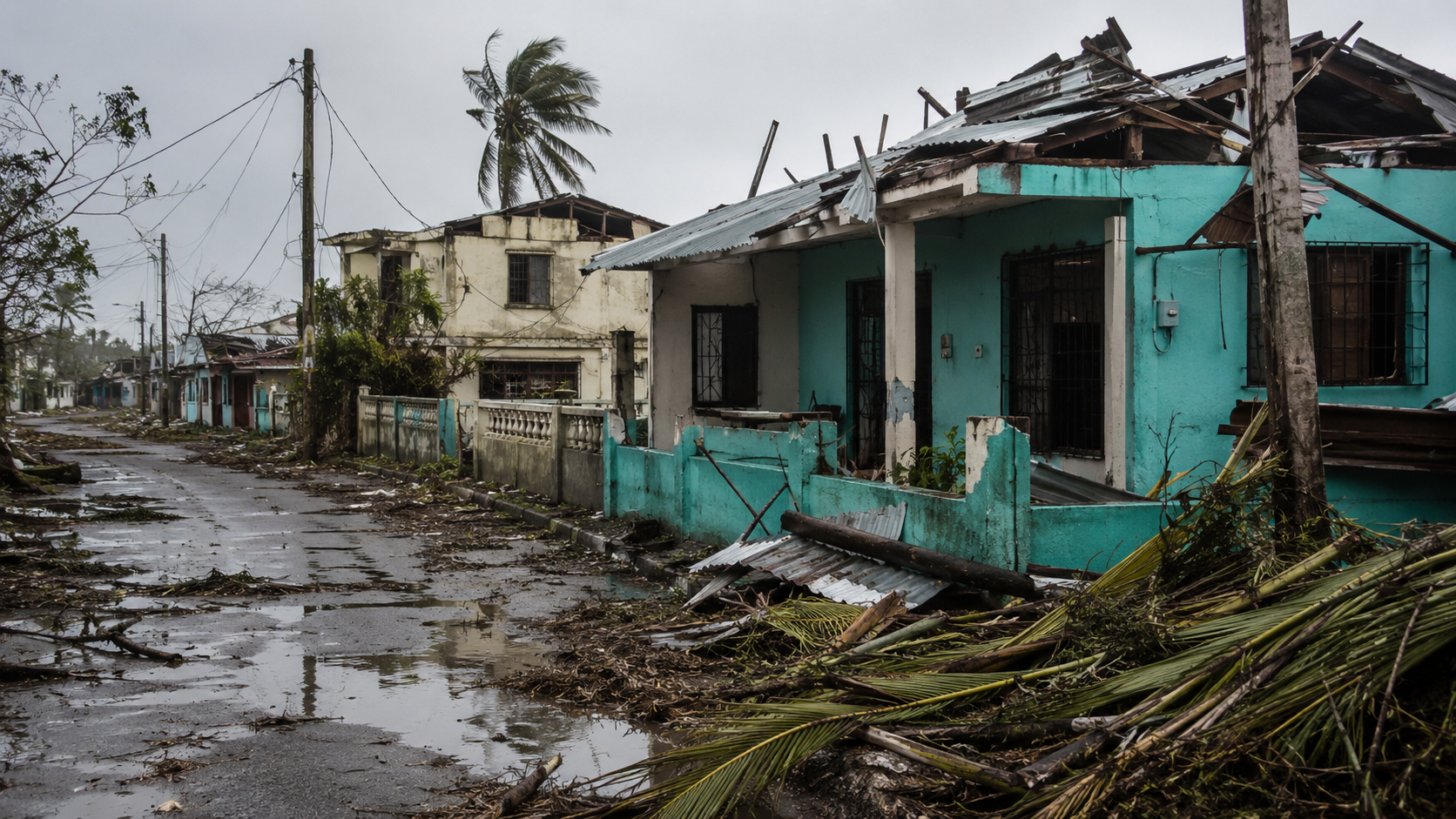
About 240 million people in Latin America and the Caribbean lived in areas exposed to at least one major climate hazard as of 2020, according to a new World Bank report.
The burden is not evenly shared. The report estimates that 44.6% of poor people in the region are exposed to at least one severe climate hazard, compared with 34.0% of nonpoor people.
The report, Adapting to Adversity: Poverty and Climate Risks in Latin America and the Caribbean, examines exposure to five major hazards: droughts, heat waves, hurricanes, floods, and landslides.
Droughts are the most widespread risk, affecting 13.4% of the region’s population. Heat waves affect 9.9%, hurricanes 7.9%, and floods and landslides 6.3% each.
The sharpest poverty gap is in drought exposure. About 18.6% of poor people are exposed to drought risk, compared with 11.4% of nonpoor people.
Where poverty and climate risk overlap
The World Bank identifies several areas where high poverty and climate hazards overlap.
These include parts of Mexico’s Caribbean, southern, Gulf and Baja California coasts; Central America’s Dry Corridor; parts of the Caribbean; northeast Brazil; Amazonian areas of Brazil, Colombia, Ecuador and Peru; and the Chaco region.
Together, those high-risk zones are home to about 64.4 million people, or roughly 10% of the region’s population as of 2020.
The report says exposure alone does not determine who suffers most from climate shocks. Poor households may also be more vulnerable because they often have fewer savings, weaker housing, less insurance and more dependence on climate-sensitive work.
Depending on the method used, the World Bank estimates that 3% to 16% of the region’s population is vulnerable to being pushed into poverty, or deeper into poverty, by climate hazards.
Why it matters
Latin America and the Caribbean have made large gains against poverty since 2000, when about half the region lived below the World Bank’s upper-middle-income poverty line.
By 2024, that share had fallen to about one-quarter. The report warns that climate hazards could make those gains harder to protect, especially for households already close to the poverty line.
The risks are not limited to immediate damage from storms, floods or droughts. The report says climate events can also affect health, schooling, earnings and long-term productivity.
That means a household may feel the cost of a climate shock long after the event itself is over.
Adaptation systems remain uneven
The report reviews adaptation tools already used in the region, including early warning systems, resilient infrastructure, ecosystem protection, disaster financing and adaptive social protection.
Some systems appear to help reduce the poverty impact of climate shocks. Countries with stronger social protection systems are described as better able to prevent the poverty gap from widening after climate hazards materialize.
But the World Bank says progress remains uneven. Many countries still have partial systems, weak registries, limited emergency financing or social protection programs that do not reach enough vulnerable households.
The report points to a layered approach: prevention before hazards strike, financial protection when losses occur, and social protection that can expand quickly after a shock.
The main caveat
The estimates measure exposure, not actual losses. They are based on overlaying poverty maps with modeled hazard maps and identifying areas where the probability of severe hazards passes defined thresholds.
Those thresholds matter. Different definitions of hazard severity or return periods could produce different exposure estimates.
Still, the report’s central finding is clear: climate risk and poverty overlap across large parts of Latin America and the Caribbean, and poor people are more likely to live in harm’s way.