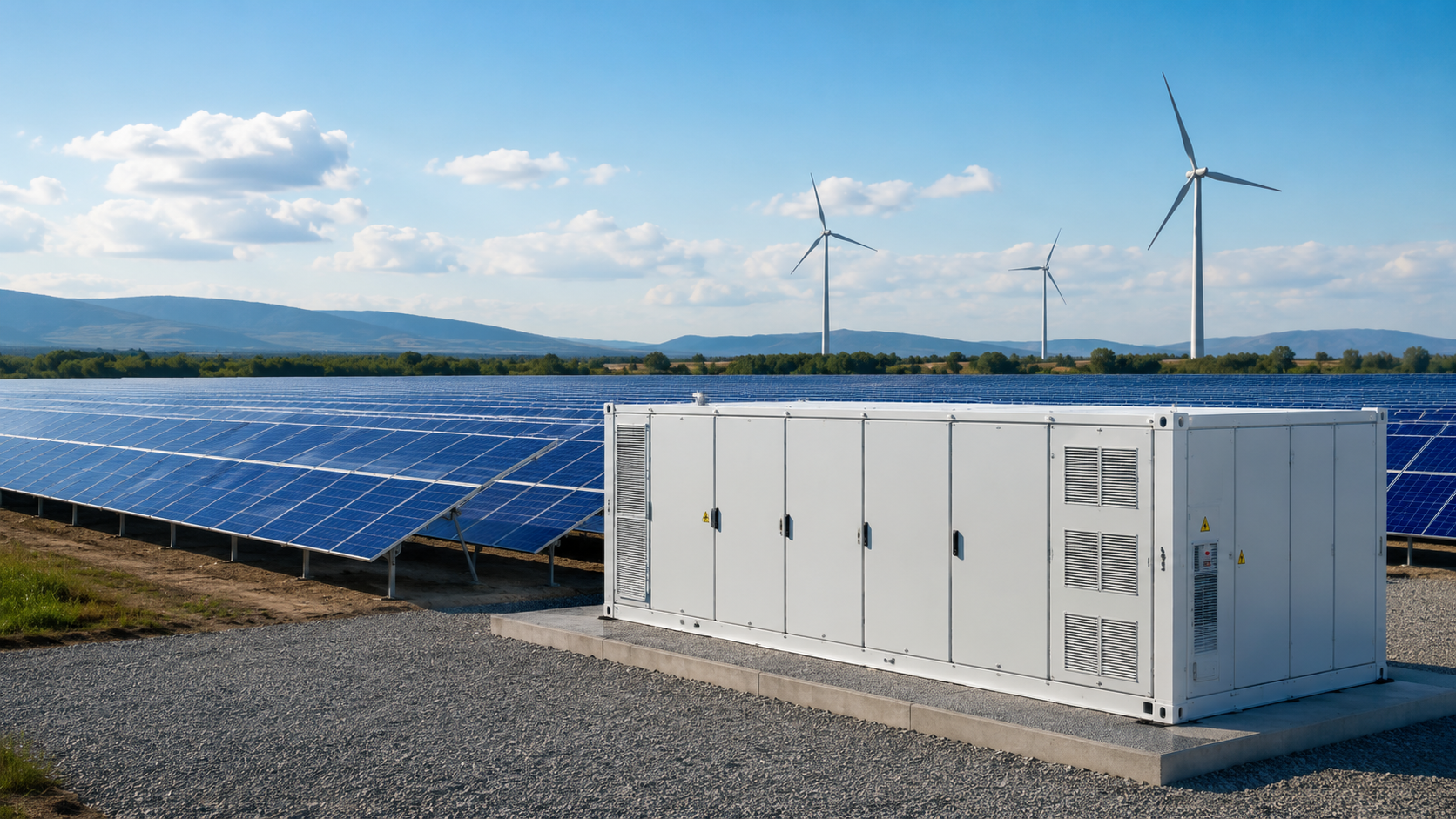
Renewable power helped countries avoid an estimated $480 billion in coal and gas purchases and 8.4 gigatonnes of carbon dioxide emissions in 2025, according to a new report from the International Renewable Energy Agency.
IRENA also found that more than 90% of newly commissioned utility-scale renewable projects produced electricity more cheaply than the lowest-cost new fossil-fuel alternative.
The agency initially calculated the benefits for 20 major economies, which together accounted for about four-fifths of global renewable electricity generation. Renewables in those countries avoided an estimated $377 billion in fossil-fuel purchases and 6.6 gigatonnes of CO₂.
IRENA then extended the same method to the rest of the world to produce the global estimates of $480 billion and 8.4 gigatonnes.
The calculation compared actual renewable generation with a scenario in which each country met the same electricity demand by expanding its existing mix of coal and gas generation. Fuel savings were valued using average annual prices rather than temporary market spikes.
The figures are gross estimates. They do not subtract the cost of building the renewable power plants or place a monetary value on reductions in local air pollution.
Wind and solar retained a cost advantage
Onshore wind was the cheapest new power source in IRENA’s global averages, with a levelized cost of $33 per megawatt-hour in 2025.
Utility-scale solar photovoltaic power averaged $44 per MWh, while offshore wind averaged $78 per MWh. A levelized cost spreads a project’s expected lifetime costs across the electricity it is expected to generate.
The global averages concealed substantial differences between markets. When China was excluded, average costs rose to $55 per MWh for solar and $51 per MWh for onshore wind.
China recorded an onshore wind cost of $27 per MWh and a solar cost of $36 per MWh. Solar costs ranged from $35 per MWh in India to $65 per MWh in Germany among the major markets examined.
Within the 20-economy avoided-cost calculation, China accounted for approximately $177 billion, or 47%, of the total. It also accounted for about 3.4 gigatonnes, or 52%, of the avoided emissions.
IRENA attributed those figures to the size of China’s renewable fleet and the coal-heavy generation displaced by it.
Battery costs fell faster than generation costs
Battery storage recorded a much steeper decline than wind or solar equipment. The installed cost of a four-hour utility-scale battery fell by close to 30% in 2025 to approximately $140 per kilowatt-hour.
That was about 95% below its 2010 level, according to IRENA. Around one-quarter of the utility-scale solar capacity commissioned globally in 2025 was paired with storage.
A separate IRENA analysis summarized in the report estimated that solar-plus-storage systems at high-quality sites could provide firm electricity at 95% reliability for between $54 and $82 per MWh in 2025. The estimated range was above $100 per MWh in 2020.
Storage allows solar and wind projects to move electricity into periods of higher demand and make fuller use of grid connections. It can also reduce the effect of low daytime power prices and renewable curtailment.
Why financing increasingly matters
Equipment prices are no longer the only factor determining renewable electricity costs. Solar installation costs fell by about 6% in 2025, but the global average cost of solar electricity remained unchanged at $44 per MWh.
IRENA said higher financing costs and slightly lower average output offset the benefit of cheaper equipment. Its model attributed about 56% of the variation in project financing costs to country-level conditions such as interest rates, inflation and sovereign risk, compared with 24% attributed to the technology itself.
That helps explain why the same solar panel or wind turbine can produce electricity at sharply different costs depending on where it is installed.
IRENA expects solar, wind and storage costs to continue declining through 2035, but at a slower pace than during the previous decade. Those projections are indicative rather than predictions and assume relatively stable economic and deployment conditions.
They also do not anticipate unexpected changes in trade or industrial policy. Preliminary figures for early 2026 showed battery-metal prices rising, meaning the steep storage-cost decline recorded in 2025 is not guaranteed to continue each year.
The report’s findings suggest that renewables retained a broad cost advantage in 2025, but future progress will increasingly depend on financing, storage, grid connections and regional supply-chain conditions rather than equipment prices alone.